

Introduction
Air travel has become one of the safest and most efficient ways to travel across the world. Every day, thousands of commercial flights safely transport millions of passengers to their destinations. This high level of safety is made possible through advanced aircraft technology, strict maintenance procedures, experienced pilots, and internationally recognized aviation regulations. Despite these impressive safety standards, unexpected situations can still occur during flight. When they do, airlines follow carefully designed emergency procedures to ensure that passengers and crew remain safe.
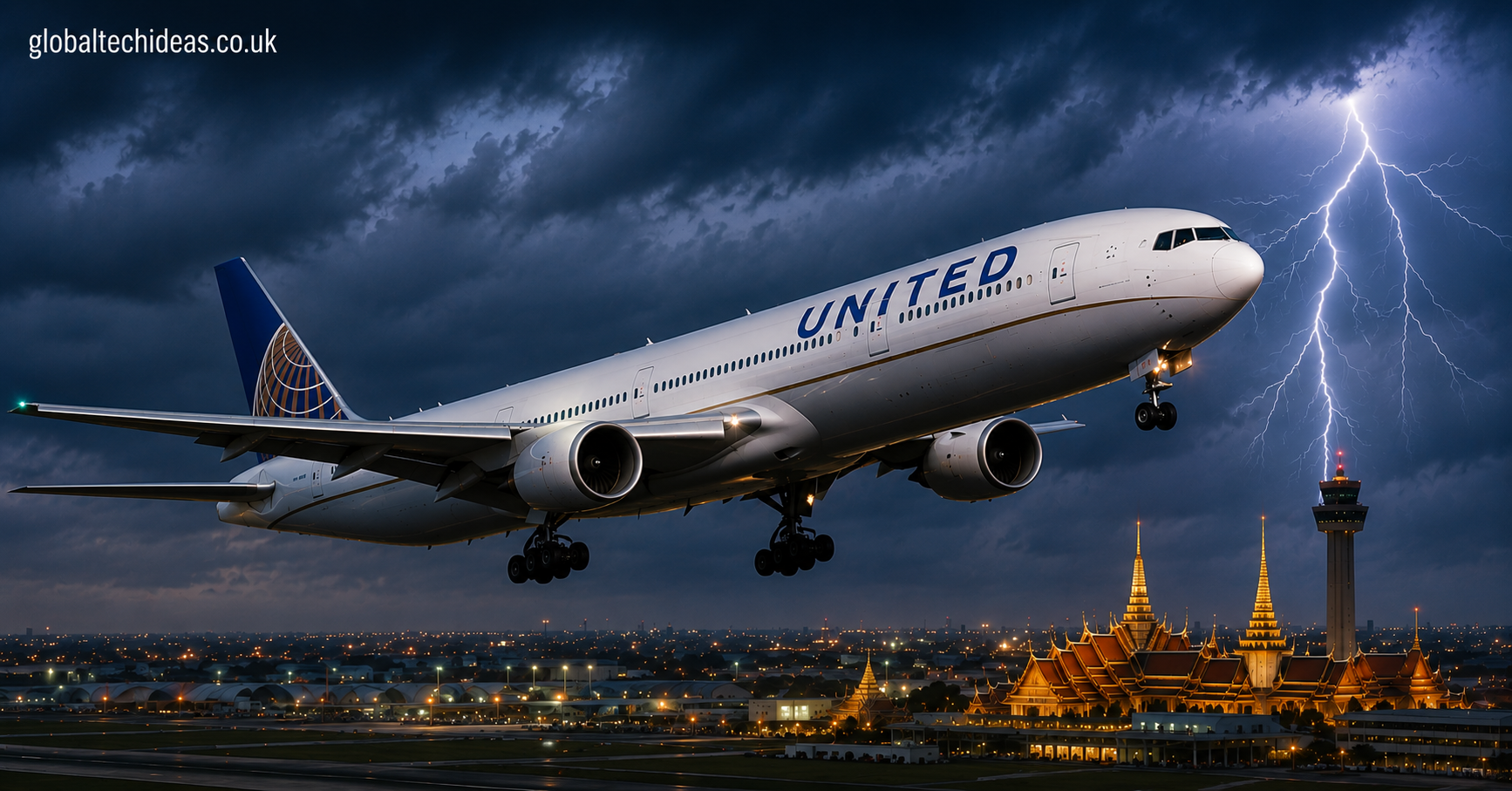
One incident that attracted significant public attention was the United Airlines Flight UA770 emergency diversion. The flight, which was scheduled to travel from Barcelona, Spain, to Chicago, United States, was forced to divert after the crew detected a technical issue during the journey. Rather than continuing across the Atlantic Ocean, the pilots declared an emergency and safely landed the aircraft at London Heathrow Airport.
What Happened to United Airlines Flight UA770?
United Airlines Flight UA770 departed Barcelona on its scheduled journey to Chicago aboard a Boeing 787-9 Dreamliner. Shortly after reaching cruising altitude, the flight crew received indications that an important aircraft system required attention. While the airline did not immediately release complete technical details, reports suggested that the issue involved either cabin pressurization or another essential onboard system.Rather than continuing the long journey across the Atlantic Ocean, the pilots followed established emergency procedures. They declared a general emergency by selecting Squawk 7700, the internationally recognized emergency transponder code used to alert air traffic control.
Once the emergency was declared, air traffic controllers coordinated with the flight crew to guide the aircraft safely toward London Heathrow Airport. The aircraft landed safely, and all passengers disembarked without any major injuries.
Understanding Squawk 7700
Many people became curious after learning that Flight UA770 transmitted the emergency code “7700.”Squawk 7700 is a universal transponder code used by pilots whenever they are experiencing an emergency. Once activated, air traffic controllers immediately recognize that the aircraft requires priority assistance.Declaring Squawk 7700 does not automatically mean the aircraft is in imminent danger. Instead, it allows controllers to provide immediate support by clearing airspace, coordinating emergency services, and arranging the safest possible landing.Commercial airline crews receive extensive simulator training on when and how to use this emergency code.
Possible Reasons Behind the Emergency Diversion
Although investigators may continue reviewing the incident, aviation experts have identified several common reasons why flights similar to UA770 are diverted.
Cabin Pressurization Issues
One of the most likely explanations involves cabin pressurization. Modern aircraft cruise at altitudes above 35,000 feet where oxygen levels are too low for normal breathing.
The aircraft’s environmental control system maintains comfortable cabin pressure throughout the flight. If abnormal pressure changes occur, pilots immediately begin emergency procedures, including deploying oxygen masks if necessary and descending to a safer altitude.
Technical System Warning
Modern aircraft contain thousands of electronic sensors that constantly monitor flight systems.
Sometimes a warning appears even before an actual failure occurs. In these situations, pilots follow manufacturer checklists and frequently choose to land at the nearest suitable airport rather than continuing the flight.
Electrical Problems
Electrical systems power navigation equipment, communication systems, cabin controls, lighting, and numerous flight computers.
Any significant electrical malfunction requires careful evaluation because it can affect multiple aircraft systems simultaneously.
Engine Indications
Although the Boeing 787 is designed to continue flying safely even if one engine becomes unavailable, abnormal engine indications often result in precautionary diversions.
Modern pilots always choose the safest available option.
Smoke Detection
Smoke or unusual odors inside the cabin or cockpit are treated extremely seriously because determining the exact source while airborne can be difficult.
Whenever smoke warnings occur, immediate landing becomes the highest priority.
Why London Heathrow Was Selected
London Heathrow Airport is one of Europe’s largest international airports and is fully equipped to handle wide-body aircraft such as the Boeing 787 Dreamliner.
Several factors made Heathrow the ideal diversion airport:
- Long runways suitable for heavy aircraft
- Advanced emergency response services
- Highly trained maintenance personnel
- Availability of replacement aircraft if necessary
- Passenger facilities for international travelers
- Extensive airline support operations
Choosing the nearest suitable airport is a standard safety principle in commercial aviation.
Boeing 787-9 Dreamliner Overview
The aircraft involved in the incident was the Boeing 787-9 Dreamliner, one of the most technologically advanced commercial aircraft in service today.
Some notable features include:
- Composite carbon-fiber construction
- Improved fuel efficiency
- Advanced flight management computers
- Modern cabin pressurization system
- Larger passenger windows
- Lower cabin altitude for improved passenger comfort
- Enhanced weather radar
- Multiple backup flight systems
The aircraft is specifically designed with numerous redundant safety features that allow safe operation even when one system experiences problems.
Passenger Experience During the Diversion
Passengers described the experience as unexpected but generally well managed.
Reports indicated that flight attendants remained calm while providing instructions throughout the emergency. Safety demonstrations became especially important as oxygen masks reportedly deployed during the event.
Although many passengers naturally experienced anxiety, the professionalism of both the cockpit crew and cabin crew helped maintain order throughout the flight.
Following the safe landing, United Airlines arranged assistance for affected travelers, including rebooking options, meal support, and accommodation where required.
How Pilots Respond During Emergencies
Commercial airline pilots undergo years of professional training before operating international flights.
During emergencies they follow standardized procedures that include:
- Identifying the problem
- Reviewing emergency checklists
- Contacting air traffic control
- Selecting the safest diversion airport
- Communicating with cabin crew
- Preparing passengers
- Conducting a safe landing
Every emergency procedure is practiced repeatedly in advanced flight simulators before pilots are certified to operate passenger aircraft.
Aircraft Inspection After Landing
Once the aircraft reached Heathrow, engineers performed a comprehensive technical inspection before returning it to service.
Maintenance teams examined:
- Pressurization systems
- Electrical equipment
- Environmental control systems
- Flight computers
- Hydraulic systems
- Aircraft structure
- Engine performance
- Safety equipment
No commercial aircraft is allowed to resume passenger operations until engineers confirm that every required system is functioning correctly.
Why Emergency Diversions Should Not Alarm Passengers
Many travelers assume an emergency landing means the aircraft narrowly escaped disaster.
In reality, most diversions occur because pilots choose the safest option before the situation becomes dangerous.
Modern aviation follows a philosophy of prevention rather than reaction.
Whenever uncertainty exists, airlines prefer landing early rather than accepting unnecessary risk.
This approach has helped make commercial aviation one of the safest transportation systems in the world.
Safety Lessons from Flight UA770
The United Airlines Flight UA770 emergency diversion demonstrates several important lessons:
- Safety always comes before schedules.
- Modern aircraft continuously monitor their own systems.
- Pilots receive extensive emergency training.
- Air traffic control provides immediate support during emergencies.
- Diversions are precautionary decisions rather than signs of failure.
- Aircraft undergo detailed inspections before returning to service.
- Passenger cooperation helps emergency procedures run smoothly.
Conclusion
The United Airlines Flight UA770 emergency diversion serves as an excellent example of how commercial aviation safety systems work together to protect passengers. Although the unexpected diversion disrupted travel plans, the coordinated efforts of the flight crew, air traffic controllers, cabin staff, and ground personnel ensured that everyone reached the ground safely.
Modern aircraft like the Boeing 787-9 Dreamliner are built with multiple layers of protection, while airline crews receive continuous training to manage unexpected situations professionally. Incidents like UA770 remind travelers that emergency diversions are not signs of failure but evidence that aviation safety procedures are working exactly as intended. By placing passenger safety above convenience, airlines continue to maintain one of the safest transportation systems ever developed.
Frequently Asked Questions (FAQs)
1. Why was United Airlines Flight UA770 diverted?
The flight was diverted after the crew detected a technical issue that required a precautionary landing. Early reports suggested a possible cabin pressurization or system-related concern.
2. What does Squawk 7700 mean?
Squawk 7700 is the international emergency transponder code used by pilots to notify air traffic control that the aircraft requires immediate assistance and priority handling.
3. Was the aircraft able to land safely?
Yes. The flight landed safely at London Heathrow Airport, and passengers disembarked without reports of major injuries.
4. Why did the pilots choose London Heathrow?
London Heathrow was the nearest suitable airport with long runways, emergency response teams, maintenance facilities, and the capability to handle a Boeing 787-9 Dreamliner safely.
5. Are emergency diversions common in commercial aviation?
Emergency diversions are relatively uncommon, but they are a normal part of aviation safety procedures. Airlines always prioritize passenger safety and will divert whenever continuing the flight could increase risk.